Embarking Upon Our 15th Season
Building the Pathways That Connect Our Junior Members
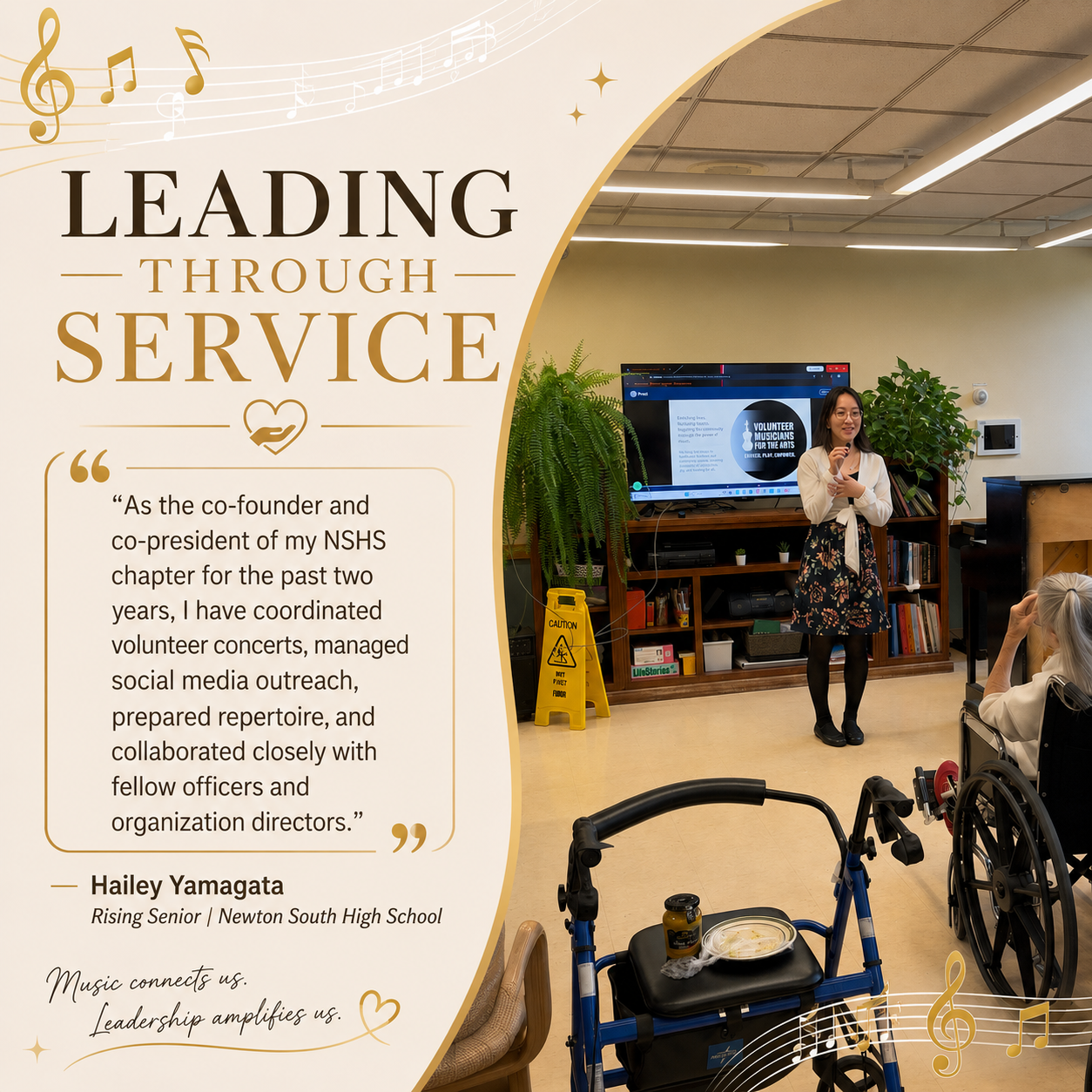
The future of the VMA is in the capable hands of our Junior members.
"Lead from the back—and let others believe they are in front." – Nelson Mandela
One of the most important challenges ahead of us is not simply growing the VMA Junior Program—it is connecting it.
As our organization expands beyond Boston, we must ensure that no Junior member feels isolated from the larger movement. Every member should have the opportunity to participate in state and national initiatives just as readily as they participate in local concerts and service projects. Building those pathways for communication is the hard work ahead of us, but it is work worth doing.
Over the past several years, we have developed a strong foundation built on service, stewardship, and leadership. During the early stages of the Junior Program, a more top-down structure was necessary as we established policies, programs, and expectations. As we continue to grow, however, our role as adult leaders must evolve. My responsibility as Director is to steward the movement and provide guidance—not to dictate the change our young people wish to bring to their communities. Adults should not simply speak for young people; they should create opportunities for young people to speak for themselves.
That is why we are investing in communication infrastructure through our Google for Nonprofits Workspace.
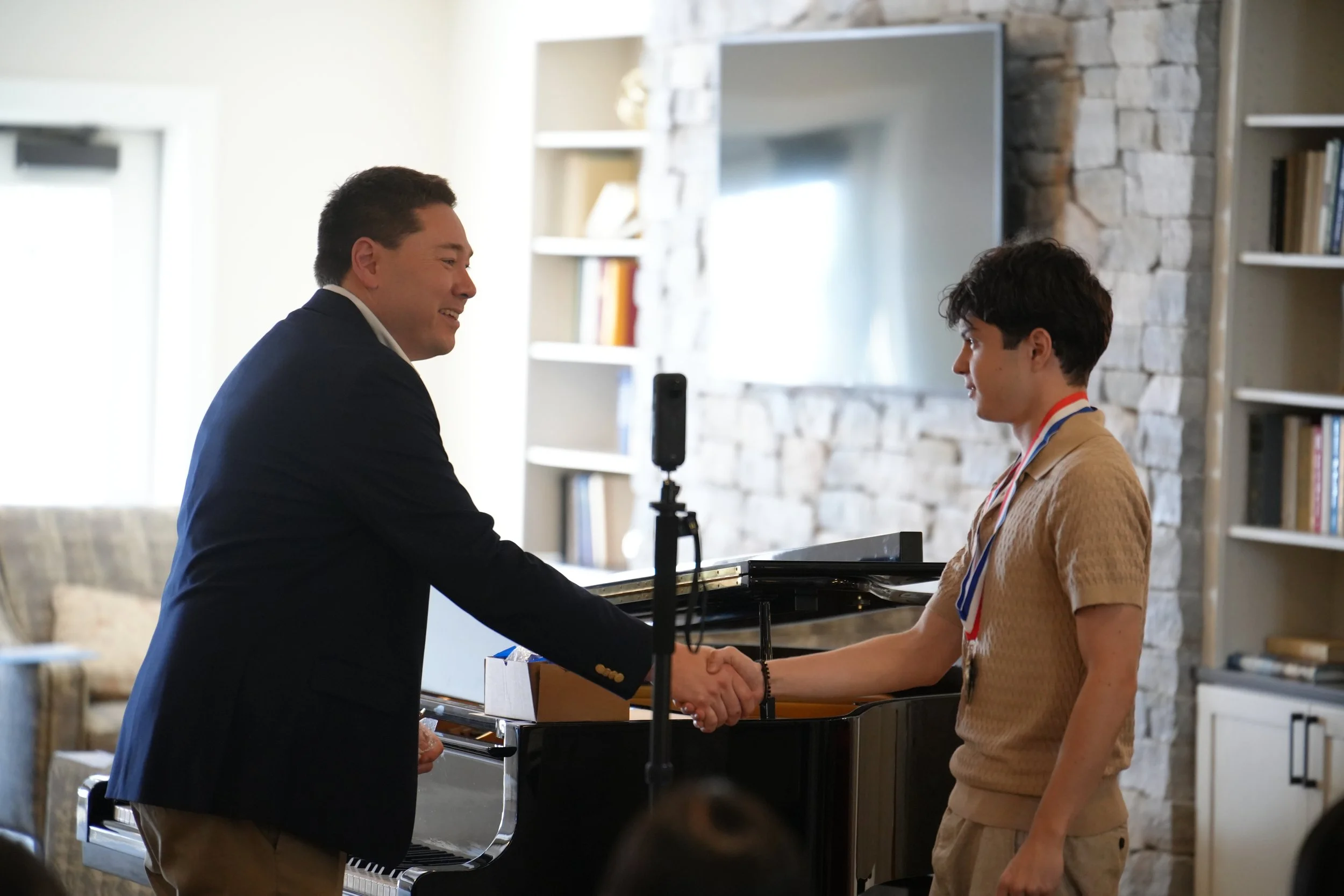
Building infrastructure.
In music, and life, communication is key.
Beginning with a handful of our older student clubs, we will begin testing new communication systems that allow members to collaborate more effectively across clubs, state leadership, and the national organization. High school members receive their own VMA email accounts and become part of club-based Google Groups, creating dedicated spaces where clubs can communicate internally while remaining connected to State Senators and our National Cabinet. Members will also begin contributing updates to internal VMA Google Sites, making it easier to share ideas, celebrate accomplishments, and coordinate service efforts. Elementary and middle school members will continue contributing through submitted reflections, photos, and media until they are old enough to receive Google Workspace privileges.
This effort would not be possible without student leadership. I am especially grateful to Hailey Yamagata, our Massachusetts State Senator and a rising high school senior, who has enthusiastically taken on the challenge of helping build this communication framework. Developing these systems is not a one-week project, a one-month project, or even a one-year project. It will require patience, creativity, and persistence. Hailey could use all of our help as we continue building something that, if done well, will serve generations of young musicians to come.
Fundraising will, of course, continue to be part of our future—as it is for every nonprofit organization. But for nearly fifteen years, I have tried to focus first on building a mission that can withstand pressure, much like a strong constitution that provides stability through changing times, rather than simply pouring money into a bottomless pit. To bring VMA to where it is today has required remarkably modest resources—roughly $10,000 per year to keep the lights on—because our greatest investment has always been people, not overhead.
If you believe this mission is worth investing in, then it is not simply the Director you are supporting. You are supporting music educators across this country who are capable, willing, and deserving of bringing music into their communities through service. Imagine helping a small private studio in Oklahoma launch an outreach concert series while simultaneously strengthening a national network of volunteers committed to the same ideals. Our Service Initiative model exists so that local communities and the larger mission grow together rather than compete for limited resources.
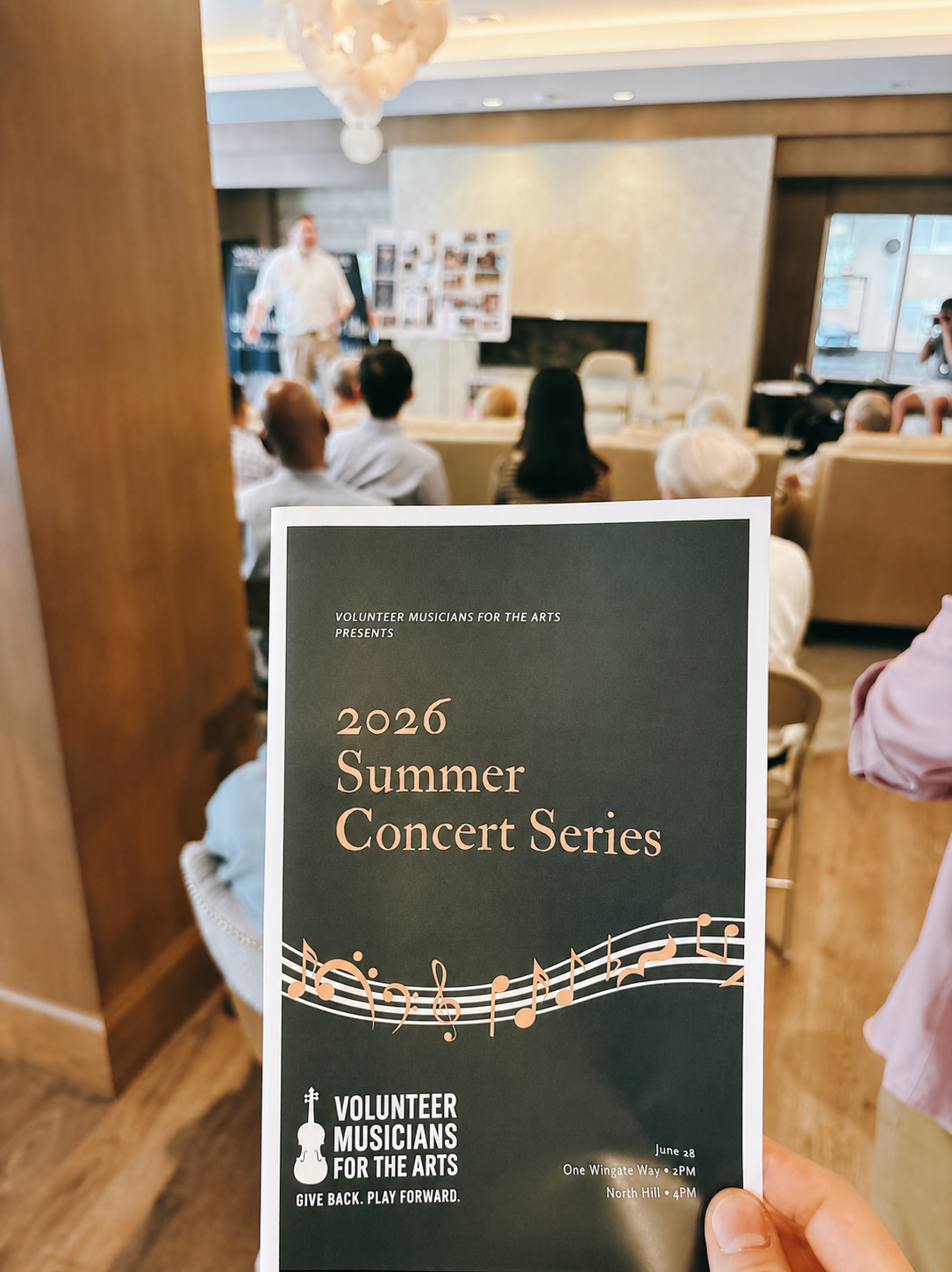
We bring dignity to outreach.
The VMA is more than a symbol of hope. It fosters community and belonging.
As a music educator, I have believed from the very beginning that one of the greatest barriers preventing teachers from dedicating more time to outreach is not a lack of passion—it is a lack of sustainable funding and meaningful systems that recognize, organize, and celebrate volunteer service. Rather than asking educators to choose between serving their own communities and supporting a larger organization, we are building a model that allows them to do both. Through our student-led Service Initiative, members are equipped with fundraising tools and organizational support that strengthen their local healing concerts, food pantries, or shelters, while also advancing the broader mission of the VMA. My hope is that we can demonstrate a simple truth: when local communities flourish, the national mission flourishes with them.
Ultimately, our goal is simple. When Junior members know they have the tools, the support, and the relationships to create meaningful change, they will begin collaborating in ways no single adult could ever orchestrate. State Senators will play a vital role in maintaining a pulse on clubs throughout their states, helping ideas and accomplishments flow naturally to the National Cabinet and, when appropriate, to our website, newsletter, and social media channels. Our responsibility is to build the pathways; our young people will determine where those pathways lead.
To continue this conversation, I will be hosting an open discussion virtual workshop for Junior members on Sunday, July 12, at 2:00 p.m. These monthly conversations have been part of our Junior Program for several years, giving dedicated members a place to share ideas, ask questions, and help shape the future of VMA. Going forward, I hope these workshops become just one part of a much more connected community—one where members communicate more frequently, collaborate across clubs and states, and discover that they are part of something much larger than themselves.
The Junior Program is only three years old. If this is where our students have brought us in such a short time, I cannot help but wonder where they will lead us by VMA's twentieth anniversary. That future will not be built by one director or one board. It will be built by hundreds of young people, educators, volunteers, and supporters working together—one conversation, one club, and one act of service at a time.
Thank you for your support.
Jonathan Y.