Thinking and Fundraising Intentionally
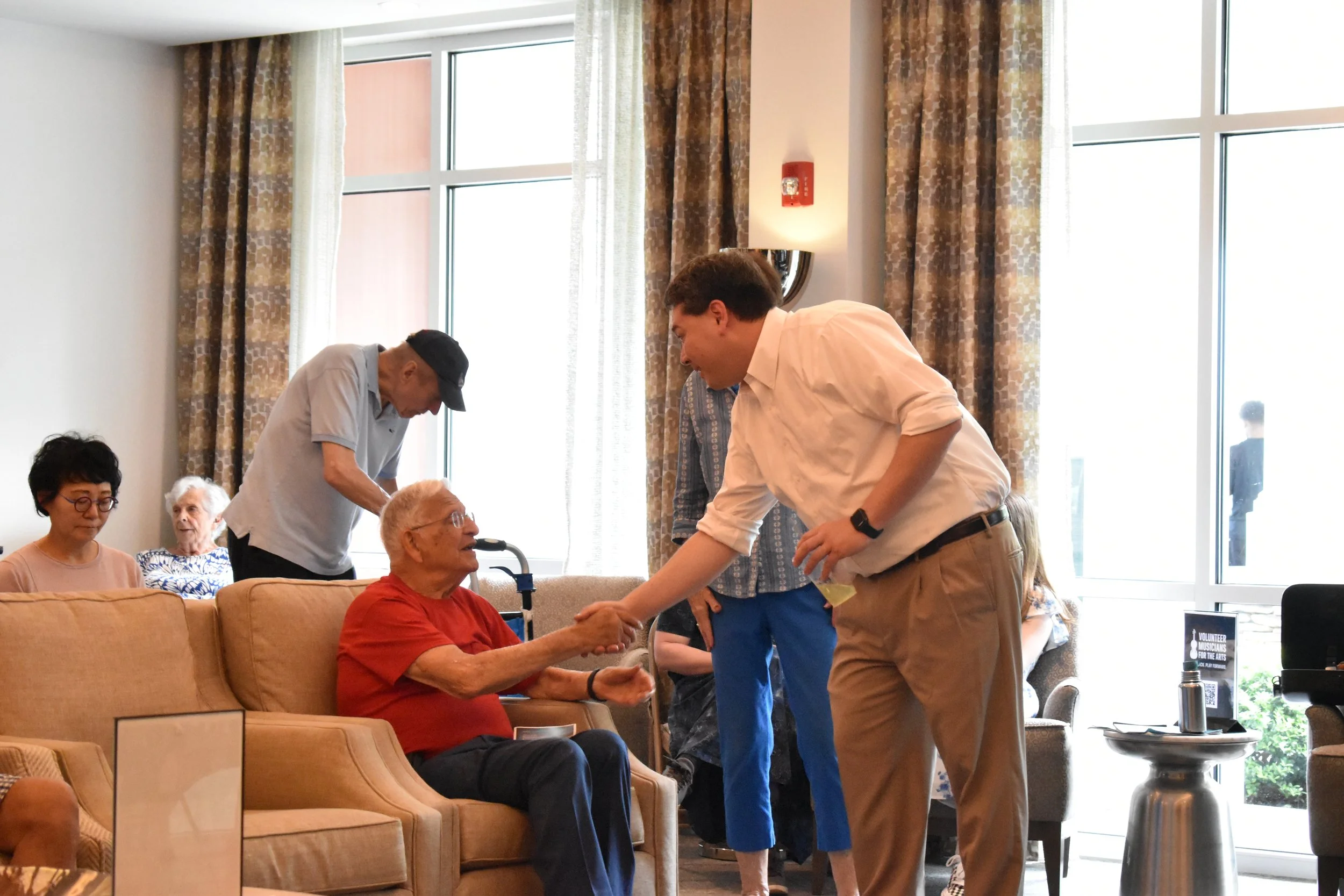
‘The point is to learn how to engage a community in something you believe matters.” - Jonathan Yasuda, Director
A New Chapter in Stewardship
Families have been an important part of VMA's story from the very beginning.
In fact, the VMA Foundation recognizes that the Junior Program would not be where it is today without a few families who believed in our mission early on—and whose children helped bring the program to life.
Their support, encouragement, and willingness to say yes helped build the foundation for the national community we have today.
But the Junior Program is maturing.
And so are our students. Their voices matter, and the VMA Board is listening.
Our students know fundraising matters—and want every student to earn their leadership.
As our students grow, we want them to take greater ownership of the stewardship that comes with leadership. That means building a fundraising team, creating a peer-to-peer campaign, communicating a purpose, and inviting their broader community to participate.
For students pursuing a VMA National Service Award, that means looking beyond their immediate household. The majority of funds raised through the Sweet Sounds of Service campaign must come from outside the student's immediate household. Family support is absolutely welcome, but students should also build relationships with extended family, friends, teachers, neighbors, community members, local businesses, and others who connect with the purpose of their service.
That's an important part of growing from a participant into a leader.
The point isn't to see how much money you can collect.
The point is to learn how to engage a community in something you believe matters.
That's stewardship.
And that's leadership.
As they go out into the world, our students will learn that being a responsible, ethical steward of society is a tall order. Why not give them the opportunity to practice it now?
Through VMA, they can put their values into action—and help make their own community a little more equitable along the way.
Build Your Team. Build Your Impact.
VMA Clubs should begin by creating a fundraising team with a student Team Leader.
Then, each team member creates their own individual peer-to-peer fundraising page.
That means your club isn't relying on one person to do all the fundraising. Each student can reach out to their own family, friends, teachers, neighbors, and community connections.
Together, those individual efforts become a collective club effort.
Start a Sweet Sounds of Service fundraiser
What About Parents?
Parents are absolutely welcome to support their child's fundraising efforts.
They can share their student's page, introduce the campaign to friends and family, and encourage others to participate.
But there's another option for parents who simply want to support VMA directly.
Parents can become members of the VMA Annual Giving Society independently of the Sweet Sounds of Service campaign.
A parent doesn't have to make a donation through their child's peer-to-peer campaign. They can choose to support VMA directly and become part of the broader community investing in our mission.
Learn about the VMA Annual Giving Society
That's an important distinction:
Students lead the fundraising campaign; families and community members can support in whatever way is meaningful to them.
It's Not About How Much You Give
For high school students especially, fundraising can become an opportunity to demonstrate stewardship.
Our third-party fundraising platform, Give Lively, allows fundraising activity to be tracked transparently. When students engage multiple sources and relationships in support of a meaningful purpose, they begin to build a documented record of community engagement.
And if you're thinking about college applications, remember:
An award is only as meaningful as the impact behind it.
It's not necessarily how much you raise.
It's how you give.
Who did you engage?
Why did you choose the cause?
How did you communicate your purpose?
What did you learn?
What difference did your efforts make?
Those are the experiences that can ultimately give substance to a leadership story.
Be a Compassionate Leader
Of course, fundraising is only one piece of leadership.
Our student government gives you opportunities to learn how to organize, communicate, collaborate, serve, and lead with compassion.
We want to give you the tools you need—from learning the ABCs of leadership to eventually figuring out how to tell your story in a college essay for your dream school.
But there is one thing we can't teach you.
Be a good person. Be an authentic person.
Serve because you care.
Lead because you want to help.
Give because your community matters.
The rest will follow.